
Sustainability in Events: Understanding Your Carbon Footprint and How Florida Fresh Events Offsets It
- Nov 26, 2025
- 5 min read
What Exactly Is a Carbon Footprint?
A carbon footprint measures the total greenhouse gas emissions generated by an event, expressed in carbon dioxide equivalents. Think of it as your event's "environmental invoice", every decision from venue selection to floral arrangements contributes to this tally.
For events specifically, this footprint encompasses attendee travel, venue energy consumption, waste production, catering logistics, and yes, even those stunning floral arrangements that transform your space. The "big ticket" items typically include air travel for out-of-town guests, venue heating and cooling systems, and transportation of materials and supplies.
Event carbon footprints vary dramatically. A local corporate gathering might generate 0.5 tons of CO2 per attendee, while destination weddings can clock in at 3-5 tons per guest. The numbers add up quickly when you factor in international flights, extended venue usage, and elaborate décor installations.

Why Your Event's Carbon Impact Actually Matters
Climate consciousness isn't just "trendy": it's becoming a business imperative. Corporate clients increasingly demand sustainability reporting, and couples planning weddings want celebrations that align with their values. The event industry generates approximately 2% of global greenhouse gas emissions, making it a significant contributor that can't be ignored.
Beyond environmental responsibility, carbon-conscious planning offers practical benefits. Sustainable events often reduce costs through waste minimization and local sourcing. They generate positive press coverage and strengthen brand reputation. Most importantly, they demonstrate forward-thinking leadership that resonates with increasingly eco-aware audiences.
The ripple effects extend far beyond the event itself. Sustainable practices influence vendor selection, encourage innovation within the supply chain, and educate attendees about environmental responsibility. Each conscious choice creates momentum for broader industry transformation.
Florida Fresh Events' Carbon-Negative Approach
Florida Fresh Events operates as a carbon-negative company, meaning we remove more carbon from the atmosphere than our operations produce. This isn't just "offset marketing": it's a comprehensive strategy involving measurable reforestation projects, innovative waste management, and strategic partnerships.
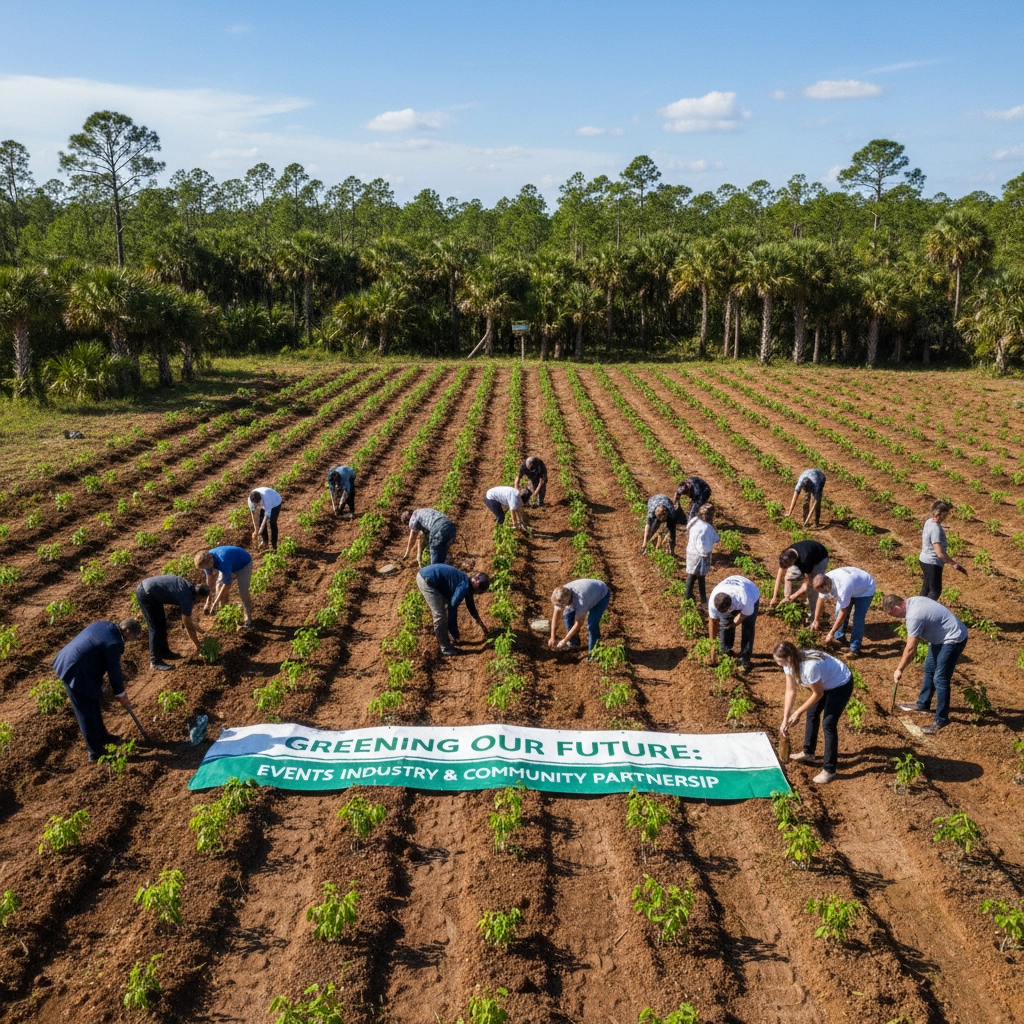
Our reforestation initiatives span multiple Florida locations, with each tree planted carefully tracked through GPS mapping and growth monitoring systems. These aren't symbolic gestures: we plant native species that thrive in local ecosystems and provide maximum carbon sequestration over their lifespans.
The math works like this: A mature oak tree absorbs approximately 48 pounds of CO2 annually. Our current reforestation projects include over 2,000 trees across various growth stages, creating substantial carbon absorption capacity that far exceeds our operational emissions.

Revolutionary Floral Composting Program
Traditional floral waste represents a massive missed opportunity. Most event flowers end up in landfills, where they decompose anaerobically and release methane: a greenhouse gas 25 times more potent than CO2.
Florida Fresh Events captures 100% of our floral materials post-event. Our composting program transforms these materials into nutrient-rich soil amendments distributed to local farms throughout central and south Florida. This closed-loop system prevents methane emissions while supporting agricultural sustainability.
The composting process follows strict protocols. Flowers are collected within 24 hours of event conclusion, mixed with carbon-rich materials like leaves and wood chips, and processed in temperature-controlled composting systems. The resulting compost improves soil health, reduces chemical fertilizer dependency, and enhances crop yields for participating farms.
Partner farms report improved soil structure, increased water retention, and enhanced microbial activity in fields receiving our floral compost. This creates a regenerative cycle where event waste becomes agricultural enhancement, supporting both environmental and economic sustainability.
Strategic Partnerships for Maximum Impact
Our sustainability commitment extends through our entire vendor network. Florida Fresh Events prioritizes partnerships with minority-owned businesses and small enterprises that share our environmental values. These relationships create economic opportunity while maintaining strict sustainability standards.
We collaborate exclusively with farms holding recognized sustainability certifications: USDA Organic, Certified Naturally Grown, and Florida Organic Growers certifications. These partnerships ensure that our fresh materials originate from operations using regenerative agricultural practices that enhance rather than degrade environmental systems.
Transportation logistics receive equal attention. Local sourcing reduces "flower miles," and our delivery routes are optimized using GPS technology to minimize fuel consumption. Reusable packaging eliminates single-use materials, and our delivery vehicles run on biodiesel when possible.

Comprehensive Sustainability Reporting
Florida Fresh Events is developing detailed sustainability reports for each event, providing clients with complete environmental impact documentation. These reports will quantify carbon footprint, waste diversion rates, local sourcing percentages, and offset achievements.
The reporting system tracks multiple metrics: energy consumption, transportation emissions, waste generation and diversion, water usage, and carbon sequestration from our reforestation projects. Each report includes specific recommendations for future events and demonstrates measurable environmental improvements.
This transparency allows clients to understand their event's environmental impact and communicate their sustainability achievements to stakeholders. Corporate clients can integrate these metrics into their own sustainability reporting, while couples can share their environmental accomplishments with friends and family.
Practical Carbon Reduction Strategies
Smart venue selection dramatically impacts event footprints. Facilities with LED lighting, efficient HVAC systems, and renewable energy sources significantly reduce emissions. Venues offering comprehensive recycling and composting programs eliminate waste-related emissions.
Digital invitations and event management systems eliminate paper production and shipping emissions. QR code menus and programs reduce printing while providing interactive experiences. Electronic RSVPs streamline communication while cutting postal service emissions.
Local sourcing extends beyond flowers to include catering, entertainment, and service providers. Regional vendors reduce transportation emissions while supporting local economies. This approach often improves service quality since local providers understand regional preferences and logistics.
Waste Stream Optimization
Strategic waste management transforms potential environmental liabilities into resources. Comprehensive recycling programs capture materials ranging from glassware to electronics. Compostable serviceware eliminates landfill contributions while supporting soil health.
Food waste represents significant opportunity for impact reduction. Proper portion planning, strategic buffet design, and donation programs for surplus food prevent waste while supporting community organizations. Partnering with local food banks creates positive social impact alongside environmental benefits.
Décor elements deserve special consideration for sustainability. Rental options for larger pieces reduce manufacturing demand. Modular designs allow components to be reconfigured for multiple events. Natural materials like wood and stone offer durability and end-of-life recyclability.
The Future of Sustainable Events
Industry transformation requires systemic change, not just individual actions. Florida Fresh Events collaborates with other event professionals to establish sustainability standards and share best practices. This collective approach accelerates adoption of environmental responsibility throughout the industry.
Technology continues expanding sustainability possibilities. Carbon calculation software provides precise emissions tracking. Digital displays replace printed signage. Virtual reality previews reduce site visits and associated travel emissions.
Client education remains essential for meaningful progress. Each event provides opportunities to demonstrate sustainable practices and their benefits. Success stories inspire additional clients to prioritize environmental responsibility in their celebrations and corporate functions.

Sustainability in events isn't just about reducing negative impacts: it's about creating positive environmental and social outcomes that extend far beyond the celebration itself. Through comprehensive carbon management, innovative waste programs, and strategic partnerships, Florida Fresh Events demonstrates that beautiful, memorable occasions can contribute to environmental restoration rather than degradation.