
Florida Fresh Events Launches Composting Program with O-Town Compost
- Nov 26, 2025
- 3 min read
Corporate sustainability isn't just a "buzzword" anymore: it's a business imperative. Florida Fresh Events proudly announces our partnership with O-Town Compost, Central Florida's premier composting service, to create a comprehensive waste diversion program that transforms event florals into nutrient-rich soil amendments for local agriculture.
This collaboration represents a significant shift in how event florals complete their lifecycle. Instead of contributing to Florida's already-strained landfill capacity, spent arrangements and ceremony installations now feed back into the local food system through O-Town's composting infrastructure.
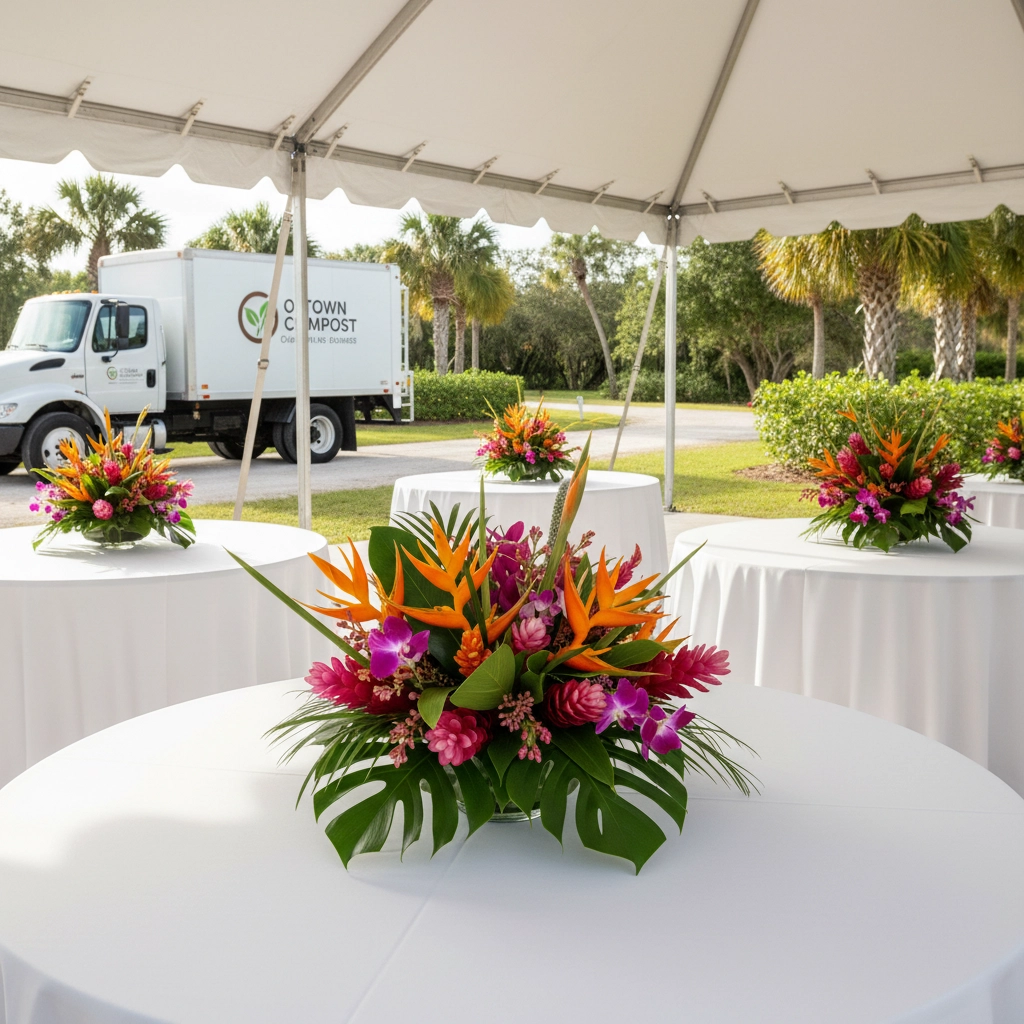
The Zero-Waste Mission
O-Town Compost operates under a simple philosophy: organic waste belongs in soil, not landfills. Together, our composting turns our event florals and plant-based decor into nutrient-rich compost that nourishes local farms and gardens, building a true "closed-loop" for Central Florida.
The partnership addresses a critical gap in event sustainability. Traditional event cleanup involves loading spent florals into dumpsters bound for methane-producing landfills. Our composting partnership diverts this organic matter into controlled composting environments where beneficial microorganisms break down plant materials into soil-enriching amendments.
Our zero-waste approach extends beyond simple collection. The system is engineered to keep organics in aerobic, well-managed conditions that minimize greenhouse gas emissions and maximize soil-building value for the region.
Floral Waste Transformation Process
Event florals present a high-impact sustainability opportunity. Diverse stems, petals, and greenery—mixed textures, varied densities, "all the pretty things"—are directed into a circular pathway that yields clean, finished compost for local growers.
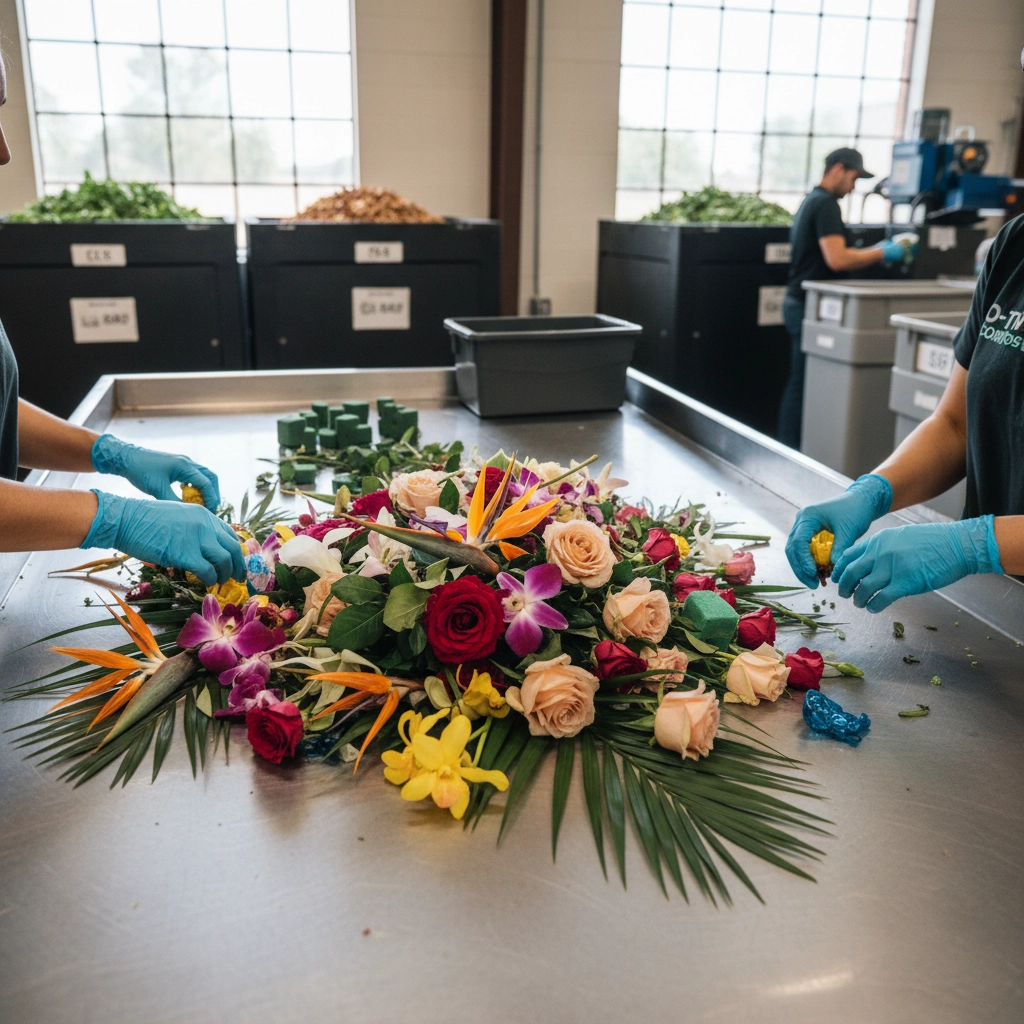
Through a managed, aerobic process, organic material becomes a stable soil amendment. The result: nutrient-dense compost that supports healthier soils, stronger water retention, and resilient crops across Central Florida.
Environmental Impact Metrics
Landfill diversion represents the most immediate environmental benefit. Every ton of organic waste diverted from landfills prevents approximately 0.3 tons of CO2-equivalent methane emissions: a greenhouse gas 25 times more potent than carbon dioxide.
Florida's agricultural sector benefits directly from finished compost distribution. Local farms, community gardens, and school agricultural programs receive nutrient-rich soil amendments that reduce dependence on synthetic fertilizers. This creates a circular economy where event materials contribute to food production rather than waste accumulation.
Soil health improvement extends beyond immediate agricultural benefits. Compost application increases soil water retention, reduces erosion, and enhances beneficial microbial activity. These improvements create long-term agricultural productivity gains while supporting Florida's environmental resilience.
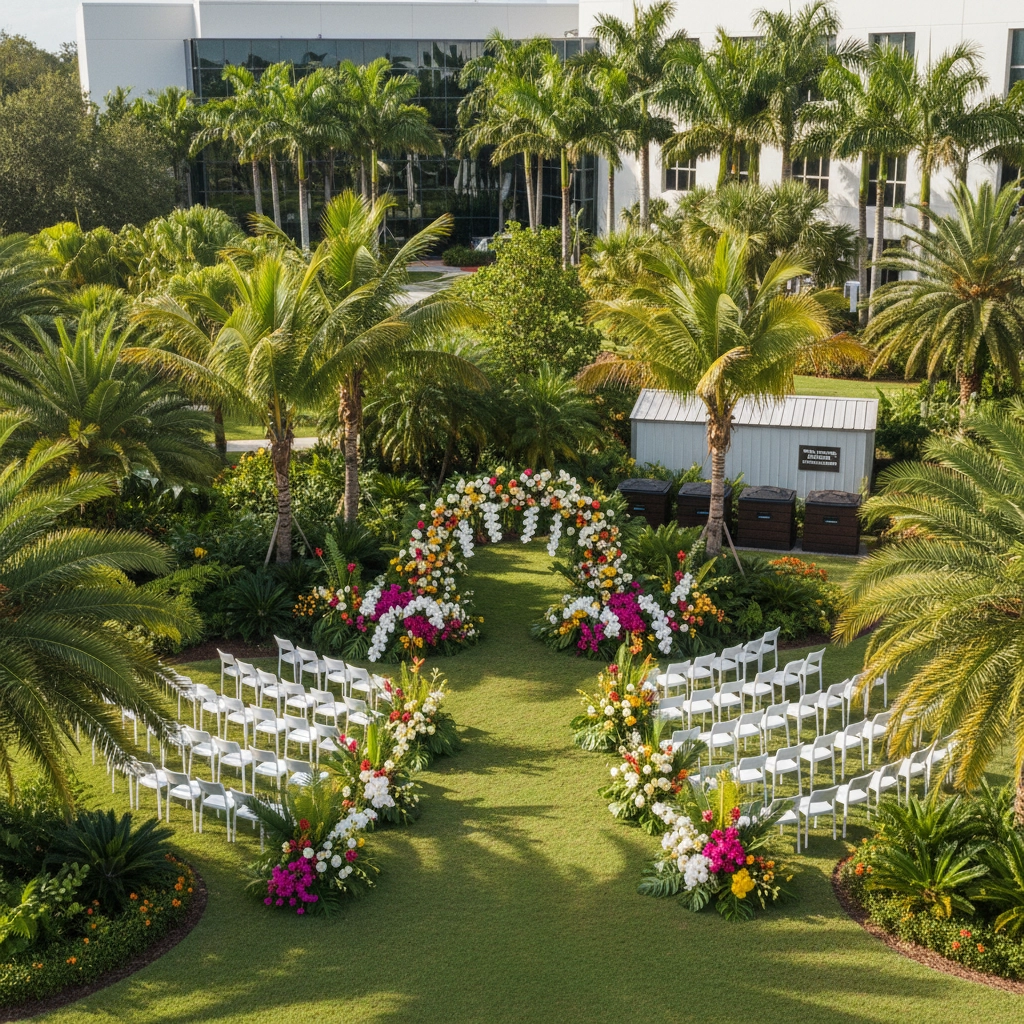
Client Benefits and Process Integration
Event clients experience seamless sustainability integration without operational disruption. Florida Fresh Events folds composting into standard teardown workflows and manages documentation end-to-end.
Corporate clients particularly value measurable sustainability outcomes for ESG reporting and stakeholder communications. The partnership provides concrete environmental impact data that supports broader corporate sustainability initiatives.
Wedding clients appreciate meaningful environmental legacy creation. Ceremony florals become soil amendments supporting local food production: a romantic notion that extends celebration impact beyond the single event day.
Community Agriculture Support
O-Town's compost distribution network prioritizes local agricultural operations, school gardens, and community food production initiatives. This ensures event-derived compost directly supports Central Florida's food security and agricultural education programs.
Partnership with local farms creates measurable community impact. Finished compost improves soil conditions for organic vegetable production, citrus groves, and specialty crop cultivation. These improvements support local food systems while reducing agricultural dependence on synthetic inputs.
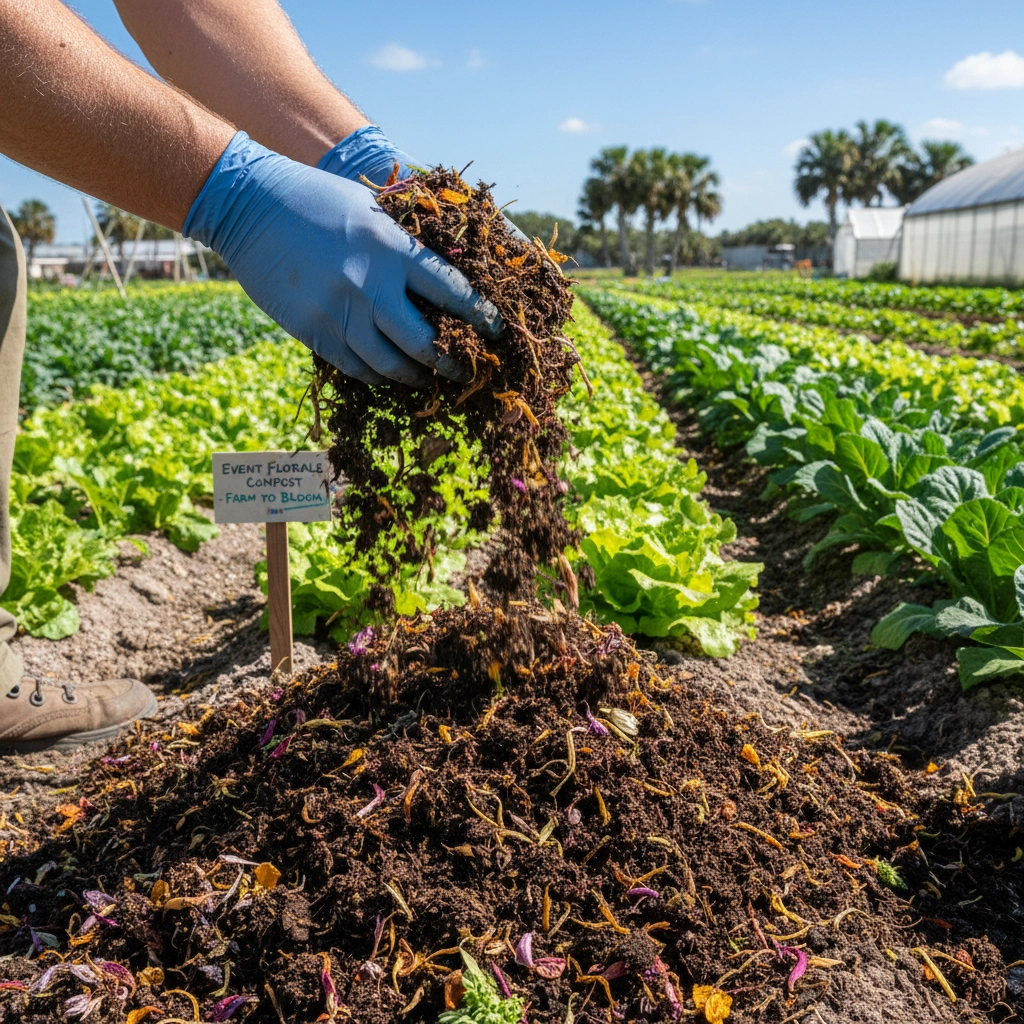
Educational institutions receive priority access to finished compost for campus gardens and agricultural programs. This creates opportunities for students to witness circular economy principles in action while supporting campus sustainability initiatives.
Greenhouse Gas Reduction Analysis
Methane emissions from landfilled organic waste contribute significantly to atmospheric greenhouse gas concentrations. Organic materials in anaerobic landfill environments produce methane through bacterial decomposition: a process that continues for decades after initial disposal.
Controlled composting eliminates methane generation through aerobic decomposition management. Oxygen-rich environments support beneficial bacteria that break down organic materials without methane byproducts. This process transformation represents immediate and measurable greenhouse gas reduction.
Carbon sequestration in finished compost provides additional environmental benefits. Applied compost stores carbon in soil matrices for extended periods while supporting plant growth that captures additional atmospheric CO2. These dual benefits amplify overall environmental impact beyond simple waste diversion.
Sustainability Impact, At-a-Glance
Florals and greenery redirected from landfill into a "closed-loop" stream serving local farms, school gardens, and community growers.
Finished compost improves soil structure, elevates water-holding capacity, and supports resilient crops across Central Florida.
Landfill diversion curbs methane (CO2e reductions that matter for ESG).
Tangible community benefit: compost applied to campus gardens, urban farms, and neighborhood plots.
Clean teardown. No extra steps on-site. Integrated into standard event workflows.
Choosing Sustainable Event Partners
Selecting Florida Fresh Events means actively participating in Central Florida's circular economy development. Every floral arrangement contributes to local agricultural productivity rather than landfill accumulation. This partnership transforms event planning from resource consumption to community investment.
Measurable environmental impact provides concrete sustainability credentials for corporate clients and meaningful legacy creation for personal celebrations. The composting program represents tangible action toward environmental stewardship that extends far beyond single-event boundaries.